Table of contents
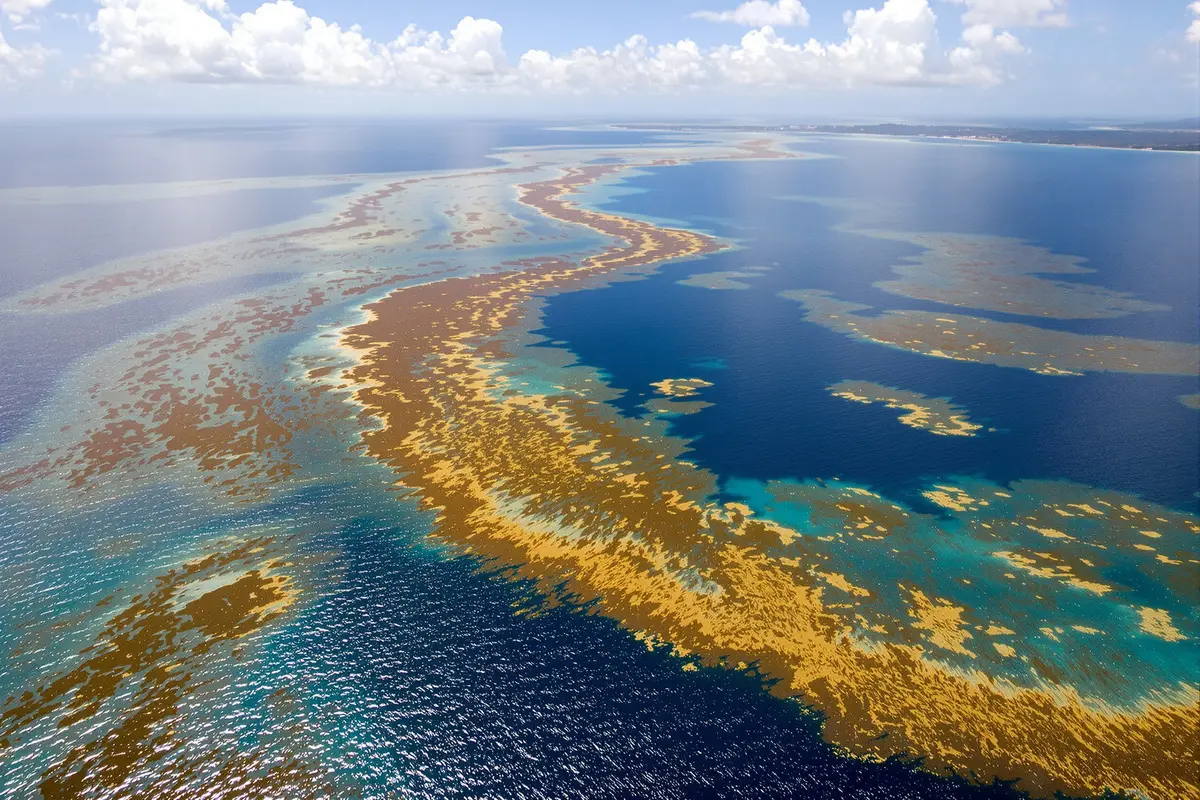
It starts as a quiet line across the sea — a streak of brown cutting through the deep blue like an oil smudge on a clean mirror. But this is no ordinary ocean phenomenon. It’s massive, unsettling, and growing fast. Scientists now call it the Great Atlantic Sargassum Belt, a floating forest of seaweed so large it can stretch thousands of kilometers and be seen from space.
What exactly is this sprawling brown ribbon?
The brown mass is made up of sargassum, a type of natural seaweed that floats freely on the ocean’s surface. In small amounts, it’s actually helpful to marine life. Fish, turtles and tiny sea creatures use it for shelter, like a mobile underwater nursery.
But something has changed. What used to be a seasonal or occasional bloom has turned into a near-constant band stretching from West Africa to the Caribbean. Satellite images have recorded belts over 8,000 kilometers long, with some years worse than others—like 2011, 2015, 2018 and most recently, the massive bloom of 2023.
What’s behind the sudden surge?
This explosion of sargassum isn’t random. It connects directly to what’s happening on land. Here’s what’s fueling it:
- Rising ocean temperatures fuel faster algae growth.
- Large river systems like the Amazon, Congo and Mississippi carry fertilizer runoff and sewage into the ocean.
- Climate change and altered currents spread the bloom far and wide.
In short: we’re fertilizing the ocean — from thousands of kilometers away. And the ocean is responding in full color.
The cost at the shoreline
When this seaweed reaches land, it’s not just an eyesore. It rots quickly under the sun, giving off a foul smell similar to rotten eggs, thanks to the release of hydrogen sulfide and methane. That’s not only unpleasant — it can be harmful:
- Headaches, eye irritation and nausea are common symptoms.
- Asthmatics and young children often suffer the most.
The impact ripples beyond health. In places like Ghana and Mexico’s Caribbean coast, tourism grinds to a halt during sargassum season. Hotels lose business. Local governments spend millions of dollars annually on cleanup operations — money that could’ve gone to schools or public health programs instead.
Fishermen find nets clogged with sludge instead of fish. Boat engines choke on tangled seaweed. Beach workers don masks to avoid inhaling the gas while shoveling mountains of algae by the truckload.
An unsettling signal
This brown ribbon isn’t just a mess. It’s a message from the ocean, a visual sign that environments – both marine and human – are deeply connected. As one scientist put it, the belt acts like a billboard for pollution and climate disruption. It reflects the consequences of everything from agriculture and urban waste to rising global temperatures.
And no — experts don’t believe it’s going away anytime soon.
Can anything be done?
No single solution will erase the Great Atlantic Sargassum Belt. But some communities are getting creative — and organized.
Smarter preparation
- Satellite forecasts and ocean models are helping Caribbean islands plan ahead and move boats or protect wildlife areas like turtle nesting sites.
- Floating barriers slow the seaweed’s approach, allowing boats to collect it before it hits the beach and rots.
Turning waste into value
- Startups are exploring ways to turn sargassum into fertilizer, bricks, biogas, or eco-friendly plastics.
- These projects offer new jobs and help reduce cleanup pressure — though they aren’t full solutions by themselves.
Lessons from trial and error
- Early attempts to bury seaweed in sand backfired, causing beach instability and extra gas emissions.
- Open-air burning proved too polluting and unpopular in many areas.
Despite setbacks, each misstep teaches local teams how to adapt more effectively next time. And every day of early action saves multiple days of costly crisis response.
What you can do
This may seem like a distant issue, especially if you don’t live near the coast. But small choices ripple across the same system that made the ribbon grow. Here’s how you can help:
- Check local warnings before booking coastal vacations during peak bloom seasons.
- Support hotels and tour groups that use safe and sustainable cleanup methods.
- Follow local health guidelines, especially for young children or people with breathing issues.
- Back projects that turn seaweed into products instead of just trash.
- Stay informed: follow trusted ocean science sources—not viral panic posts.
The quiet power of awareness
From a plane window, the belt looks remote. Peaceful, even. But for the families who clean it off beaches every morning or for communities who’ve seen their livelihoods shrink, this brown ribbon is a very real burden.
It doesn’t shout like a flood or storm. It creeps slowly, built from choices we don’t always see as connected — from fertilizer use in distant fields to industrial growth in far-off cities. But it’s all linked through currents, rivers, and warming seas.
Think of this ribbon as a line we drew without noticing. Now, we get to decide whether we keep crossing it — or find ways to live more gently alongside the ocean that’s clearly trying to speak to us.