Table of contents
After 70, staying strong isn’t just about logging steps or making it to the gym. It’s about staying independent in the ways that matter—like getting off the floor, reaching a shelf, or bending to pet the dog. And one daily move quietly outperforms the usual fitness advice.
Why walking and gym workouts aren’t enough after 70
Let’s be clear—walking is great for your heart. And gym sessions help maintain some muscle. But after 70, that’s not always enough to keep you balanced, resilient, and steady on your feet.
Many older adults walk daily, maybe even lift weights weekly. Yet they still struggle with stairs, low chairs, or getting up from the couch without both hands. Why? Because those routines don’t mimic the movements we actually need in daily life.
Real-world strength is about:
- Standing up without help
- Turning or twisting with ease
- Reaching lower and then rising back up
- Reacting quickly to imbalance or slips
When those patterns fade, life narrows. Outings become rare. Decline begins to pile up.
The most important pattern to practice daily
There’s one surprisingly ordinary move that builds all those abilities back—and it rarely appears on fitness posters: the ground-to-stand pattern. This means lowering yourself toward the floor and coming back up again, safely and smoothly. Over time, this strengthens your body in the ways you need most.
No fancy equipment. No long workouts. Just repeatable, gentle movements that keep your joints active and your nervous system sharp.
Why ground-to-stand matters for healthspan
Healthspan is how long you stay independent and mobile—not just alive. Ground-to-stand practice supports everything that protects you as you age:
- Improved balance to avoid falls
- Hip and knee mobility for real-world strength
- Quicker recovery after injuries or surgeries
- Confidence in movement anywhere—home, parks, travel
In one study, adults over 70 who could stand from the floor without using hands or knees had significantly lower mortality rates over several years. It wasn’t the move itself—it was what that ability said about the rest of their body systems.
How to start, right where you are
If you haven’t done this kind of movement in a while, don’t worry. You don’t need to drop to the floor on Day 1. You just need to sprinkle small, safe versions into your routine.
Step-by-step ideas to get started
- Start small: Stand from a chair using less hand support, 3–5 times per day.
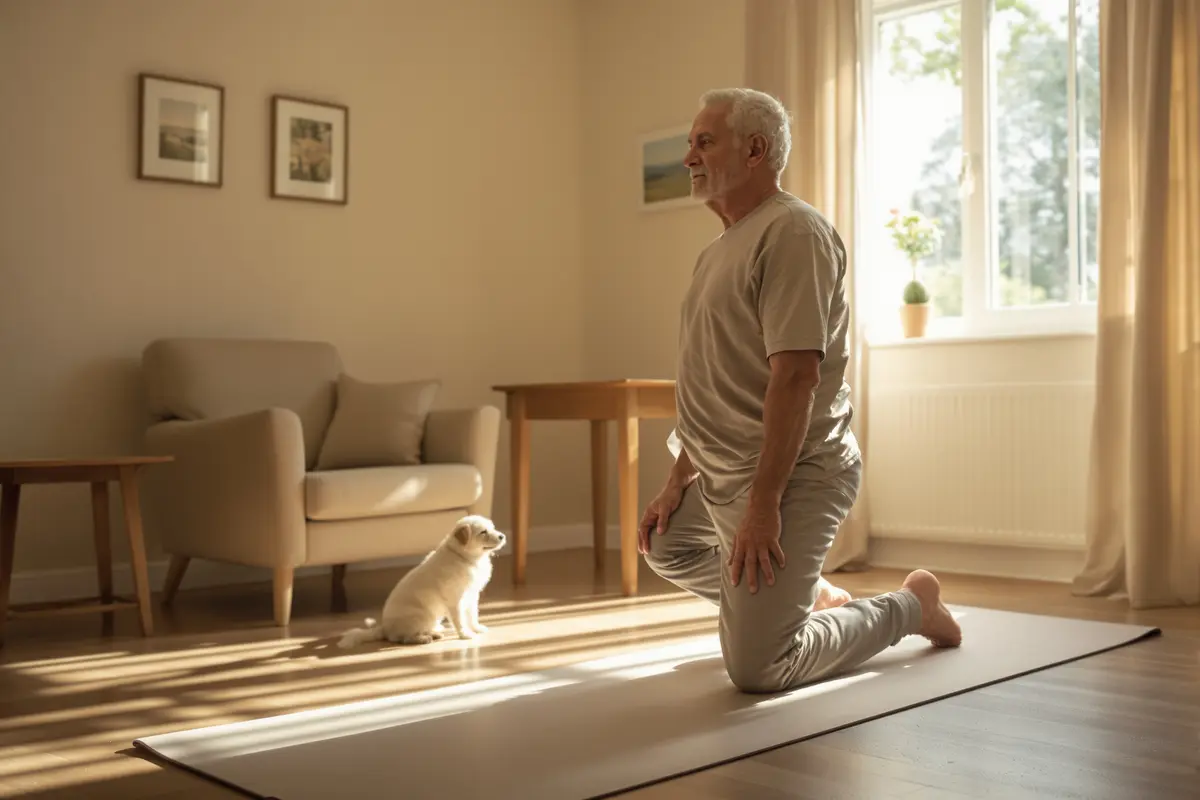
- Add a half-kneel: Hold a counter, bring one knee down onto a cushion, then come back up.
- Once a week: Sit on a low stool or cushion for 30–60 seconds, then stand with support.
These tiny reps tell your body: “We still move like this.” And that message keeps your joints capable and your nervous system alert.
Don’t let fear stop you—adapt instead
Bending or getting low may feel intimidating. That’s okay. Start near stable objects like a chair, heavy table, or your bed. Use supports as needed:
- Extra cushions for sore knees
- Railings, walls, or a friend’s shoulder
- Partial range—just go as low as feels safe
The goal isn’t perfection. It’s to stay familiar with the floor, so your body doesn’t panic if you ever find yourself there unexpectedly.
Why this move beats another gym session
Machines can build muscle. But they don’t teach your joints and brain how to react to real-world motion. The ground-to-stand move coordinates everything:
- Your feet feel the floor
- Your brain calculates balance
- Your core and hips stabilize you
- Your breathing adjusts calmly
This is movement that protects you in messy, everyday moments—not just in the gym.
A weekly mini-routine to try
Just a few minutes a day can make a big difference:
| Day | Movement |
|---|---|
| Daily | Stand up from a chair with minimal hand help, 3–5 times |
| 3 times/week | Lower one knee to a cushion and rise, 2–3 reps per side |
| 1 time/week | Spend 1 minute seated or kneeling on the floor, then stand up |
It doesn’t look like exercise. But each gentle effort is a gift to your future independence.
The bottom line: move how you live
You don’t need hard workouts. You need movement that reflects how you live—things like crouching to reach a low drawer, standing from a soft couch, leaning down with comfort and control.
This is not “training like an athlete.” It’s reclaiming the quiet patterns that make everyday life your own.
So next time you think about fitness, set aside the step counts and machines. Just kneel softly, stand smoothly, and repeat tomorrow. That motion is your new foundation for healthy aging.