Table of contents
It might seem like the Moon never changes. It floats in the night sky, pulls the tides, and lights up eclipses. But here’s a hidden truth: the Moon is slipping away from Earth, little by little, and this quiet drift is changing the length of our days and the power of our tides—whether we notice or not.
The Moon was once much closer
Let’s rewind to about 70 million years ago, during the time of the dinosaurs. Back then, the Earth spun faster. A full day was only about 23.5 hours long. Why? Because the Moon was closer, and its stronger gravity tugged more strongly on Earth, speeding things up.
How do we know this? Fossil evidence gives us clues. Ancient sea creatures like clams laid down tiny growth lines every day—just like tree rings. In 2020, scientists studied the shell of a fossil species called Torreites sanchezi. They found around 372 daily lines for every year, compared to our current 365. That means days were shorter, and there were more of them in a year.
Now, imagine going even further back—billions of years to when the Moon first formed. A huge object the size of Mars likely hit early Earth. The debris from that crash became the Moon, which then hovered much closer and caused massive tides. At that time, days may have lasted just 6 to 12 hours.
Why the Moon is drifting away
This slow drift is powered by tides. The Moon’s gravity pulls Earth’s oceans into bulges. Because Earth spins faster than the Moon orbits, those bulges get dragged slightly ahead. These bulges then pull on the Moon, nudging it farther away.
The result? Earth gives some of its energy to the Moon, slowing our spin while pushing the Moon outward. It’s like trading speed for space.
- The Moon moves away at about 3.8 cm per year—about the speed your fingernails grow.
- Earth’s rotation slows down, adding milliseconds to the day every century.
How we know it’s happening
This isn’t guesswork. Apollo astronauts placed mirrored panels on the Moon during their missions. Scientists on Earth fire laser beams at those mirrors and measure how fast the light returns.
Because we know the speed of light, we can calculate the distance very precisely—down to the millimeter. Over decades, this has shown that the Moon is indeed drifting away.
What does it mean for the future?
If nothing changed, the Moon would just keep moving away, and our days would keep getting longer. Eventually, the Earth could enter a state called tidal locking, where it rotates once for every Moon orbit—about every 27 days. This would mean the same side of Earth would always face the Moon.
Tides would almost disappear. Shorelines would become still. Entire ecosystems, especially marine ones that rely on tidal movement, could collapse or evolve in new ways.
But that won’t really happen. In about a billion years, the Sun will become hotter and start to boil away Earth’s oceans. Without oceans, there are no tides. And farther in the future, the Sun will swell into a red giant, possibly swallowing both Earth and the Moon.
Smaller changes are already happening
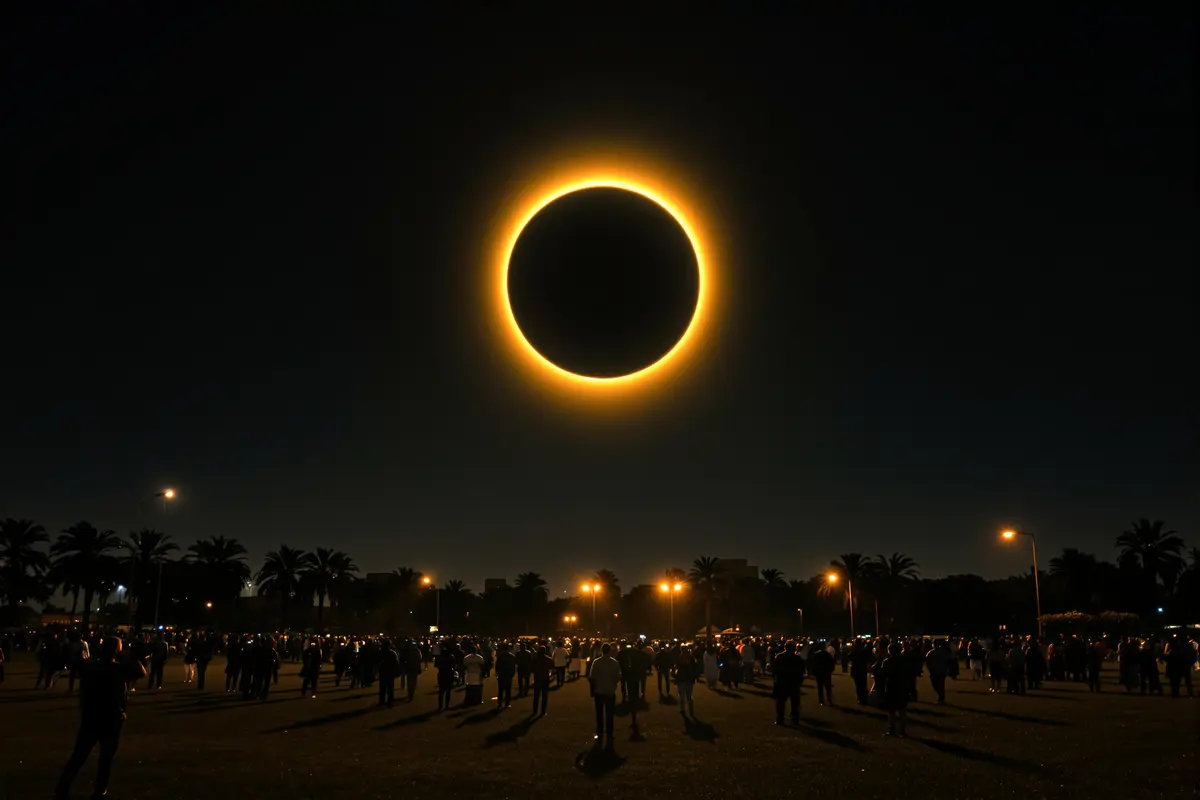
You don’t have to wait billions of years to notice effects. The Moon already looks just a tiny bit smaller than it used to. That matters during a solar eclipse. Right now, the Moon can fully block out the Sun. But as it moves farther away, it will no longer look big enough.
In the future, total solar eclipses will become rarer. Eventually, they’ll stop happening. Instead, we’ll only see “ring” eclipses where the Sun peeks around the Moon.
Tides will also weaken. Today, they vary depending on coastline shape, ocean depth, and storms. But overall, the high-tide and low-tide difference will get smaller as the Moon moves out.
The Earth-Moon story is written in rocks
Geologists study ancient sediments and see the fingerprints of this slow shift. Some rock layers show repeating tide patterns. Others mark seasonal or orbital changes. By reading these, scientists learn how long days were in the past and how fast Earth rotated.
| Epoch | Approximate Day Length | Estimated Year Length (days) |
|---|---|---|
| Modern Earth | 24 hours | 365 |
| Late Cretaceous | ~23.5 hours | ~372 |
| Early Earth (theoretical) | ~6–12 hours | More rotations per year |
This shift matters for more than history. Climate models rely on accurate data about day length and sea levels. A longer day changes weather patterns and affects how much sunlight different parts of Earth get. That’s important for modeling future climate and studying other planets.
Why this matters to science—and you
Even if you can’t “feel” the Moon drifting away, it’s reshaping the future slowly but surely. And studying it helps scientists learn how planetary systems work—including ones outside our solar system. When astronomers spot exoplanets with big moons, they look for similar tidal effects that could affect climate, ocean currents, or even the possibility of life.
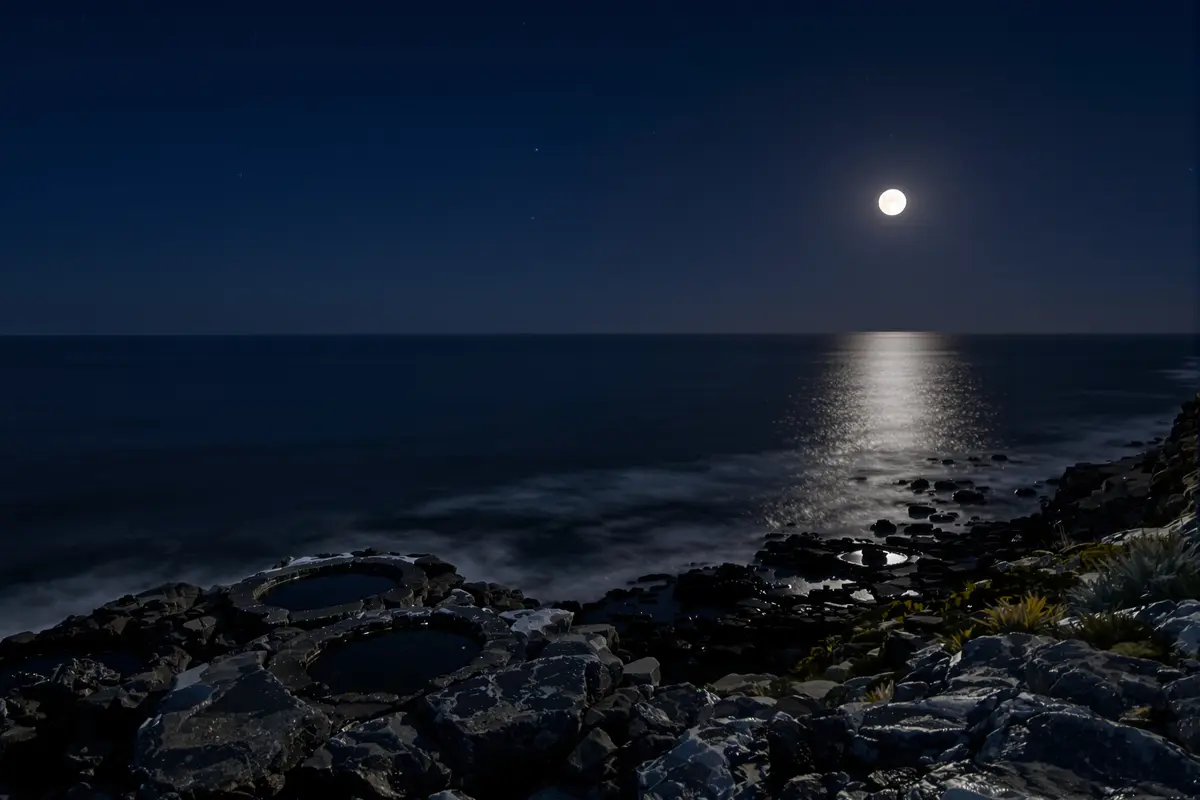
So, the next time you watch waves roll in or a Moon rise bright over the water, keep this in mind: you’re seeing a scene that won’t last forever. The Moon is slipping away. And the Earth is quietly changing with it—one millisecond at a time.