Table of contents
What does it really mean to grow old on your own terms? For Margaret, turning 100 hasn’t meant slowing down or handing control to someone else. Instead, she’s quietly defied expectations—saying no to retirement homes, pushing back on overzealous doctors, and crafting a routine that’s less about prescriptions and more about purpose.
A century old—and still in charge
Meet Margaret. She just celebrated her 100th birthday, but don’t expect her to be resting in a recliner or discussing bingo schedules. Living alone in a small brick house in Norwich, she’s said “no thank you” to several offers to move into a care facility.
Why? Because she still cooks her own meals. She still washes her favorite blouse by hand. And she still walks to the corner shop—even in the rain. She’s got routines tighter than a hospital chart but designed to serve only one patient: herself.
Her GP once suggested a retirement home for “comfort and safety.” Margaret countered with a notebook full of self-tracked steps, blood pressure readings, and a list of the neighbors she checks in on. “Doctors love charts,” she said. “Here are mine.”
Why she believes “doctors are overrated”
Margaret isn’t against medicine. She just uses it differently. In the last five years, she’s seen her doctor in person only three times. “Mostly for them,” she quips. “So they can tick their boxes.”
She takes a low-dose blood pressure pill—when she remembers. Her prescriptions get delivered once a month, stored in a biscuit tin more out of politeness than need. When something feels off, she checks her food, sleep, and stress levels before reaching for pills.
To her, doctors are there for broken bones, emergencies, or puzzles—not every bad night sleep or Sunday ache. “Getting old isn’t an illness,” she insists. “It’s a job.”
The “boring” habits that keep her strong
Spend a day with Margaret, and you won’t find miracle supplements or daily yoga. Instead, you’ll see rhythm. She eats breakfast at the same table, with the same tea (“not too weak”), watching light fall on the neighbor’s wall.
Margaret weaves movement into her chores:
- Squats while the kettle boils
- Arm lifts with the sugar jar
- Ten hallway laps before sitting down
- Standing on one foot while brushing her teeth
Her most non-negotiable rule? Go outside every single day. Even if it’s just to the garden gate to grumble about the weather.
A notebook, not a health app
Margaret doesn’t use a smartwatch or fitness tracker. Instead, she keeps a plain notebook beside her teacup, filled with notes about meals, sleep, and how she feels. When her husband passed away, it was this habit that helped her grieve, reflect, and rebuild purpose.
She tracks the little things: how many people she talked to, what meals made her feel light or heavy, how long it took to walk to the shop. She doesn’t call it data—“just keeping an eye on myself.”
Medical culture vs. meaningful action
The average elderly person in the UK takes seven medications a day. Many live in facilities where the schedule is fixed, and blood pressure checks outpace real conversation. But Margaret reminds us what happens when health becomes only a system to comply with, not a life to live.
She’s not anti-science. She’s just asking: before we hand over our choices—have we done the daily work ourselves?
How you can live a little more like Margaret
You don’t need to be 100 to try her approach. Here are a few ideas to start:
- Move before you medicate: Stretch, walk, adjust your food or water intake before reaching for painkillers.
- Talk before Googling: Mention a worry to someone before heading online—or write it down to bring to your next appointment.
- Create a bedtime boundary: No stressful topics or screens after 8 p.m. Let your brain wind down.
- Track one habit this week: Sleep, steps, meals—anything consistent. Patterns reveal more than apps sometimes can.
- Take control of your appointments: Bring a question and a note. Ask for options, not just orders.
What her story says about all of us
Most of us know the basics: move more, eat well, sleep better. But we often wait to act until symptoms push us into clinics. Margaret flips that mindset. Her life proves that health can come from meaningful routines, not just follow-up visits.
Retirement homes can offer safety—but at what cost? Margaret fears losing her freedom more than she fears falling. For her, chopping vegetables with a crooked knife or folding a towel is more than a task. It’s a statement: “I’m still active in shaping my life.”
The quiet wisdom of a rebel centenarian
Margaret’s approach isn’t for everyone. Some elderly people need frequent care. Some crave company that a residence can offer. But her story shines a light on an often-forgotten truth: autonomy feeds resilience.
Her routines are small. Her movements subtle. But what they protect is powerful—self-respect, usefulness, and involvement. These are the invisible ingredients missing from many care plans.
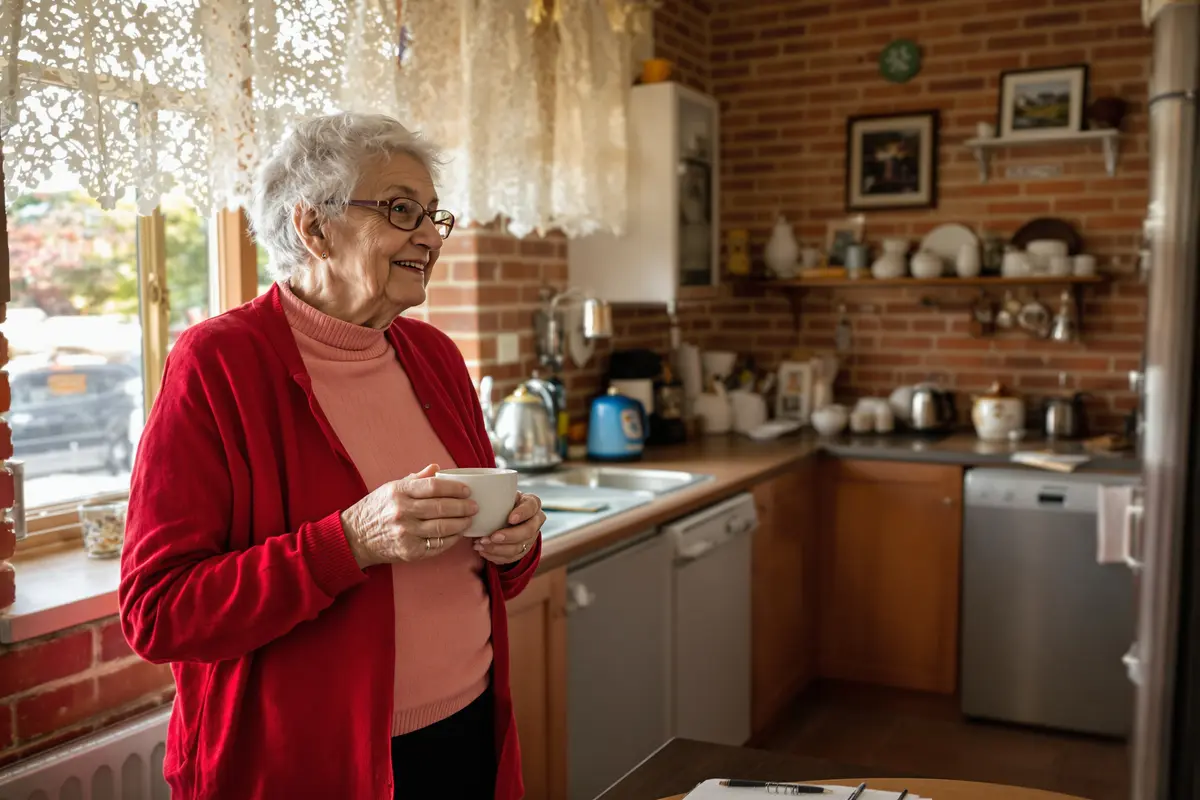
On a cold morning, as she stands by her kitchen counter, doing slow squats in a red cardigan, Margaret puts it best: “Doctors are brilliant. But your routine might save you first.”