Table of contents
On a cold winter morning, opening your windows wide might seem like the perfect way to freshen the air inside. But what if that “healthy” habit is actually setting you up for damp walls, foggy windows, and moldy corners? Here’s what really happens when you air out your home for too long—and how to do it smarter.
Why long airing in winter backfires
It feels so refreshing at first. Cold air rushes in, the room smells cleaner, the stale heat lifts. But after a while, problems creep in quietly. Your walls, floors, and furniture start soaking up that chill. And this is where the trouble starts.
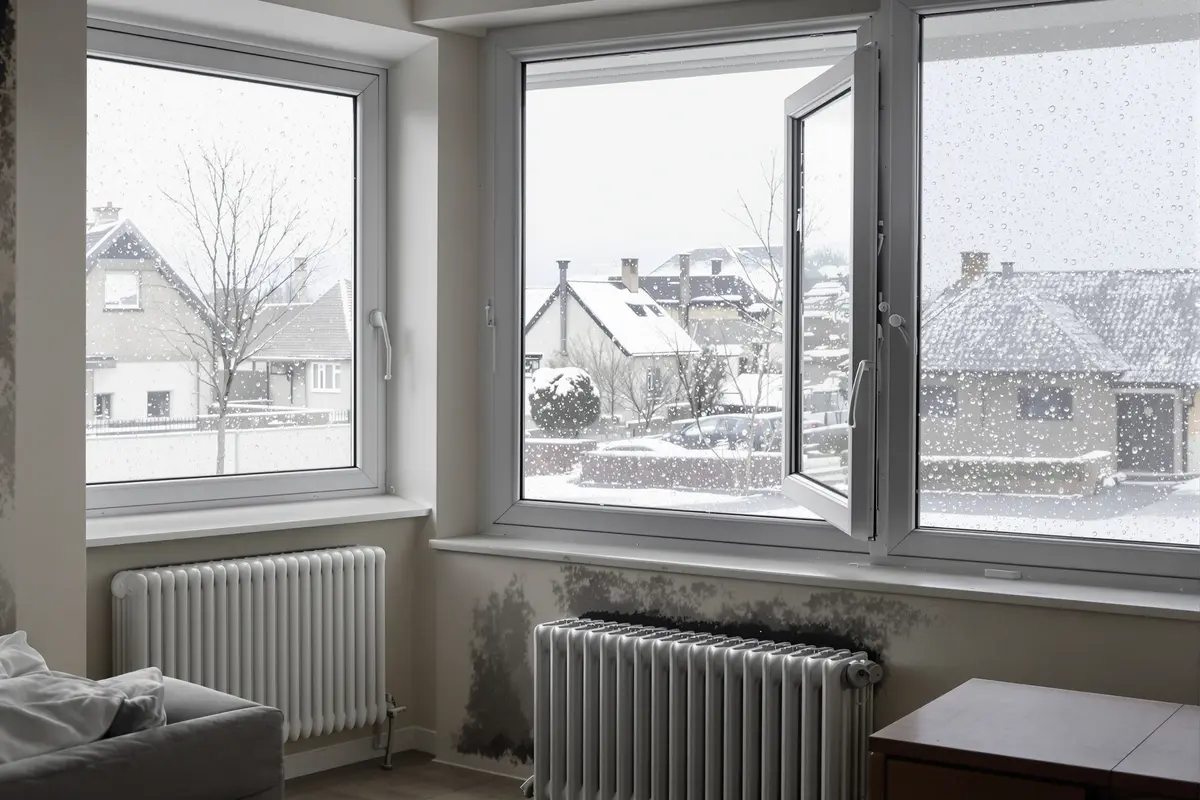
When those surfaces get cold, they attract moisture like magnets. Later, when you’re back to living normally—cooking, showering, even just breathing—your warm, humid air hits those cold spots. What happens next? It condenses. Tiny water droplets form, especially near windows, ceilings, and behind furniture.
The result isn’t a fresher home—it’s one that slowly turns into a mold hotspot.
The physics behind indoor moisture
Cold outdoor air is usually quite dry, even if it feels damp. When it enters your warm home and mixes with indoor air, the relative humidity drops—briefly. But if you leave the windows open too long, you cool more than just the air. You cool the structure of your home.
Once the window closes and life resumes, that dry air fills with new moisture. As it touches cold walls or furnishings, it hits the dew point—and condenses into water droplets. These are perfect conditions for mold growth.
Real-life example: when fresh air goes wrong
In Manchester, a couple followed an online tip suggesting long winter airing. Every morning, they opened the windows for 45 minutes. Within weeks, mold started growing behind the wardrobe and on the ceiling. Despite using cleaning sprays and airing even more, the issue worsened.
The reason? Their walls had absorbed so much cold that everyday moisture had nowhere to go but onto those chilled surfaces. A clean-sounding habit turned into a growing health concern.
Smart, short airing: how to do it right
Forget all-day tilted windows or heroic cold sessions. The most effective method is fast and focused: a technique known as shock ventilation.
- Open windows wide in opposite rooms for 5–10 minutes.
- This creates a fast-moving cross-draft that swaps stale air for fresh air efficiently.
- Surfaces stay warm, reducing condensation risk.
It’s short enough to avoid soaking your walls but strong enough to clear out moist air without wasting heating energy.
Small habits make a big difference
Consistent, tiny actions work better than big, infrequent efforts. Here’s how people manage it daily:
- Bathroom: Open the window or run the fan during and for 10 minutes after showers.
- Kitchen: Ventilate right after boiling, frying or using the oven.
- Bedroom: Open the window wide for 7 minutes before sleep, then close it.
- Laundry: If drying clothes inside, add a 10-minute airing right after and keep the room warm.
These gentle routines protect your home from turning into a slow sponge for moisture.
How to spot early moisture problems
Noticing the signs helps you fix things before they grow:
- Fogged-up windows in the morning
- Musty smells in corners or cupboards
- Black spots on ceilings or behind furniture
- Fast-filling dehumidifiers
If you recognize these, look at your airing habits and adjust little by little.
Expert tips to stay mold-free this winter
- Limit airing time: Keep it to 5–10 minutes, wide open, no tilt.
- Target moisture zones: kitchens, bathrooms and laundry areas need extra attention.
- Use fans: Always run extraction fans while cooking or showering.
- Keep furniture away from walls: Allow a few centimeters of space for air to move.
- Check windows daily: Too much condensation means it’s time to adjust your routines.
Less dramatic, more effective
Staying warm doesn’t mean ignoring fresh air. It means being smart. A swift cross-breeze every morning or after you cook does more good than hours with cracked-open windows.
And the comfort is real: your home stays warmer, smells cleaner, and feels drier. No musty corners, no cold pillows, no ghostly fog at sunrise.
You don’t need to suffer more to live better. You just need to air out the right way.