Table of contents
Forget crossword puzzles or chess. When it comes to keeping your brain sharp after 60, there’s one classic game that might surprise you — and it’s one you probably already know. It’s not complicated, it’s not digital, and it’s not what you’d expect. Ready to rethink how you challenge your mind?
Why mental workouts matter more after 60
It’s normal to notice changes in your memory or thinking as you age. Names slip your mind. Recalling a story gets harder. Conversations can feel a bit tricky to keep up with. But here’s the good news: these changes don’t necessarily mean disease. Often, they’re just signs that your brain needs more stimulation.
Activities that keep your mind engaged can boost what’s known as your cognitive reserve—basically, your brain’s backup system that helps handle changes due to aging. One of the easiest (and most overlooked) tools to strengthen that reserve? Draughts—also known as checkers.
Why draughts is the brain game you didn’t see coming
At first glance, draughts looks easy. Short games, simple rules, and perfect to play with a grandchild after lunch. But behind every move lies a complex mental challenge. It quietly activates your planning skills, memory, and emotional control.
Unlike loud digital games filled with flashing lights and sound, draughts creates a calm, focused mental workout. It sharpens your alertness in a peaceful way, helping your brain stay active without feeling overwhelmed.
What the science says about brain games and memory health
Research backs it up. A study in the New England Journal of Medicine followed adults over 75 and found that those who regularly played games like draughts had a lower risk of developing dementia. In fact, each boost in mental activity was linked to around a 7% drop in dementia risk.
Other studies using brain imaging show that mentally challenging hobbies help preserve areas of the brain connected to memory and attention. While draughts doesn’t act as a cure, it certainly helps keep your mind in motion.
How draughts keeps your brain on its toes
So what happens when you play a game of draughts? More than you’d think. Here’s how it activates different parts of your mental toolkit:
- Working memory: Remember which pieces moved, where threats came from, and what patterns lead to trouble.
- Attention: Focus closely on diagonals and moves. One moment of distraction could cost you the game.
- Planning and reasoning: Ask, “If I move here, what will happen next?” This strengthens decision-making and logic.
- Mental speed: Timed games help you think faster and respond with confidence.
- Flexibility: One move can change the whole board. You’ll need to adapt, replan, and keep cool.
It’s not just mental—it helps your mood too
Emotions and brain health go hand in hand. Playing draughts isn’t just about thinking. It’s also about connection, confidence, and joy.
The power of social play
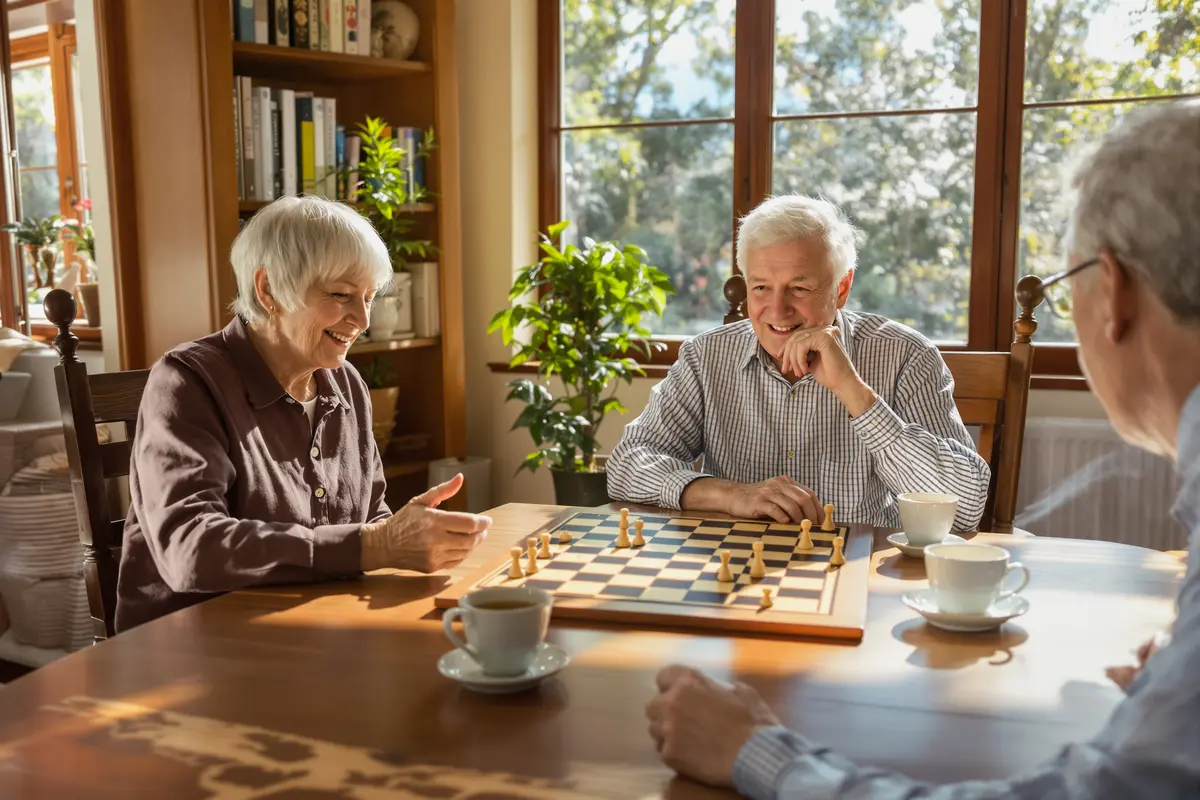
Unlike apps or puzzles you do alone, draughts is often played face to face. Meeting up with another person—even for a short match—adds powerful benefits:
- Chatting before and after games builds social bonds.
- Friendly rivalry brings laughter and lightness.
- Weekly clubs create routine and shared purpose.
Social contact has been shown to reduce depression and protect cognitive health. For people who feel isolated after major life changes like retirement or losing a spouse, a simple game becomes a weekly highlight.
Growing confidence in small wins
Each game, each win—even each well-thought-out move—reminds you that your brain is still strong. That clarity boosts your confidence. You feel more capable tackling everyday challenges: organizing medications, trying a new recipe, or planning a day trip.
How often should you play—and for how long?
You don’t need to play all day. What matters most is consistency, not intensity. A few short sessions per week can set the foundation for big gains.
| Frequency | Benefit |
|---|---|
| Once a week | Light mental tune-up and social time |
| 2–3 times a week | Better focus and stronger planning skills |
| Daily (20–30 minutes) | Solid brain workout and sharper reflexes |
Even people with mild memory issues can join in with slower-paced, untimed games. A relaxed partner, clear instructions, and simple strategies make all the difference.
Build a complete mental fitness plan
Draughts is great—but variety helps too. A strong brain thrives on different kinds of challenges. Try mixing draughts with:
- Physical activity: Light walking, tai chi, or dancing to improve blood flow to the brain.
- Learning new skills: Take a language class, try singing, or join a card group.
- Hands-on hobbies: Gardening, knitting, or painting reduce stress while building coordination.
Think of draughts as one important piece in a bigger brain-health puzzle.
Keep it fun—avoid performance pressure
Some people worry about losing or making mistakes during games. That anxiety can cancel out the benefits. Keep the game light. No strict rankings, no harsh competition. Instead, aim for an open, welcoming space where learning is the real goal.
If draughts doesn’t click for someone, that’s okay! Music, nature walks, or group crafts can bring just as many benefits, as long as they feel engaging.
Want to test it yourself? Try a mini brain experiment
Set a personal challenge: play draughts two or three times a week for a month. After each session, jot down your:
- Mood
- Focus level
- Quality of sleep
You’ll likely notice some patterns. People often find they read with more ease, sleep better after social games, or think more clearly during the day. Small shifts add up.
If you can’t meet someone in person, online draughts platforms also work. Playing against a real person or even an easy computer opponent keeps your brain active. Just make sure you’re also staying socially connected in other ways—phone calls, coffee chats, or group video hangouts can help round out the mental boost.
So next time you’re looking for a simple, steady way to keep your brain sharp—skip the flashy apps or endless puzzles. Draughts might just be the most powerful brain game you never considered.