
Table of contents
When winter strips the trees bare, most of us see emptiness. But look again—and you might find the most breathtaking season your garden has to offer. Trees in winter become striking sculptures, casting bold silhouettes and bringing life and contrast to the quietest time of the year. With the right choices, your garden can be not only beautiful but also a haven for wildlife and a calming, year-round refuge.
Why winter trees steal the show
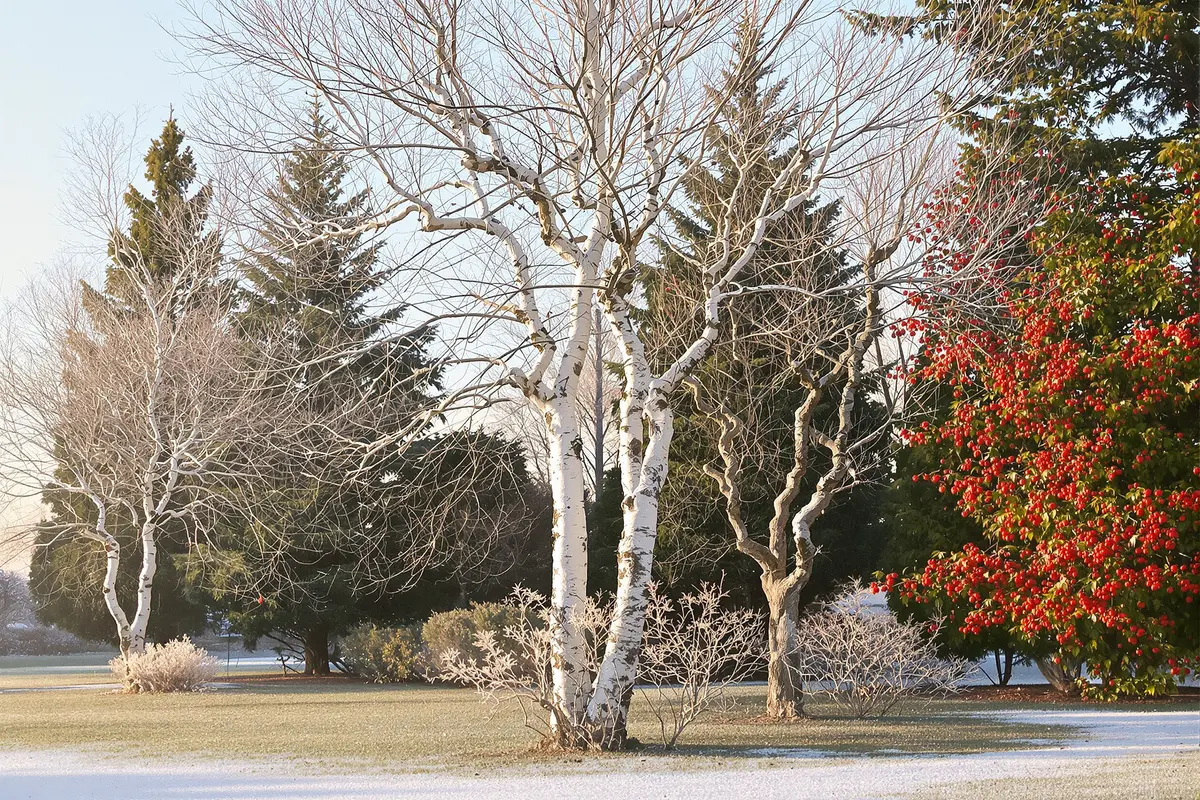
In winter, gardens transform. Without leaves blocking the view, the shapes of trunks and branches come to life. What looked like background suddenly takes center stage.
Imagine a white birch trunk glowing on a grey day, or twisting branches of a hazel outlined against the morning frost. These natural forms bring drama and structure—even on the darkest days.
What’s missing in flowers and foliage is replaced by texture, symmetry, and contrast. Bark shimmers like polished silver, berries glow like gems, and every arc or fork in a branch becomes part of an intricate pattern. Winter turns trees into living drawings.
Nature’s quiet workers in your yard
Winter trees aren’t just pretty. They’re busy.
Even without leaves, their bark hides insects, their branches shelter birds, and their roots hold soil in place. On a rainy afternoon or frosty morning, they’re still doing the quiet work of keeping your garden healthy.
Birds like blackbirds, thrushes and waxwings gather in crab apples and rowans, feeding on the bright clusters of berries. These trees provide color for your eye—and fuel for local wildlife.
In fact, gardens with fruiting trees in winter can attract twice as many bird species as spaces that have been over-tidied. That’s more than just a statistic. It’s the flutter of wings and burst of song that bring your garden to life in the quiet season.
Choosing trees that shine in winter
If you want a truly impactful winter garden, flip your planting strategy. Instead of choosing trees when they’re in spring bloom, visit a nursery in January and let the winter character speak.
Look for:
- Striking bark – like cinnamon-colored paperbark maple or silver birch
- Vibrant stems – such as redtwig dogwood or golden willow
- Winter berries – from crab apples or hollies
- Interesting structure – like the zigzag shape of contorted hazel
Your goal? Create focal points that catch your eye from key spots: kitchen windows, walkways, and even your favorite chair.
How to prune without ruining the magic
Winter is also the best time to see your trees clearly—and prune them wisely. The key is light touch and strategic cuts.
- Prune on dry days to avoid disease and get a clear view of the tree’s form
- Remove dead, crossing, or inward branches to highlight the natural shape
- Leave some safe deadwood for insect homes and bird food
- Keep things slightly wild – nature doesn’t draw straight lines
Think of it like editing a sketch. Clear out what distracts and keep the lines that tell a story. The result is a graceful silhouette that stands strong all season long.
Small space? No problem
Even tiny gardens or balconies can host a winter wonder. Try compact varieties in large containers, like dwarf birches or Japanese maples. Pair them with colorful-stemmed shrubs and let the design unfold vertically when space is tight.
Embrace the season’s slower pace
Winter trees invite a pause. You might find yourself standing just to watch the sun hit silver bark, or noticing how frost outlines every branch. These quiet moments remind you that your garden doesn’t sleep—it simply whispers instead of shouting.
And while you admire the scene, those trees are still doing their jobs: filtering carbon, sheltering life, moderating wind and moisture. Even in stillness, they work.
Frequently Asked Questions
Which tree species give the best winter show in a small garden?
Go for compact stars with standout winter features: silver birch ‘Jacquemontii’, Amelanchier, crab apples like ‘Golden Hornet’, Japanese maples, or multi-stemmed ornamental cherries.
Do winter trees still help wildlife without leaves?
Yes. Bark shelters insects, branches offer perches and nests, and many still carry berries or flower buds for birds and pollinators.
Is winter a good time to plant trees?
Yes, especially in late autumn through early spring. The soil is moist, and roots can establish before the heat of summer arrives.
How often should I prune for winter beauty?
Light pruning every 2–3 years is enough for most trees. Just remove dead or awkward branches, and check the shape from a distance as you go.
Can I have a winter garden on a balcony?
Absolutely. Use containers with small trees like Japanese maple or willow. Add shrubs with colored stems or evergreen texture for layered interest.
Winter trees don’t just fill space. They add structure, life, and story to your garden during the season that needs it most. And maybe, on a cold morning, that flash of red berries or crunch of frosted bark is all the magic you need to start your day feeling grounded.