
Table of contents
Imagine standing at noon and seeing the sky suddenly go dark. Streetlights flicker on. Birds go quiet. And for over six minutes, day behaves like night. This isn’t science fiction — it’s a real event. On August 2, 2027, the longest total solar eclipse of the century is set to cover parts of the Earth in midday darkness. And this rare cosmic event comes with both wonder and warning.
What makes the 2027 eclipse so extraordinary?
This isn’t your average eclipse. The total solar eclipse on August 2, 2027, will last up to 6 minutes and 23 seconds — the longest of the entire 21st century. During that time, the sun will completely disappear behind the moon, creating a surreal twilight in the middle of the day.
Here’s why it’s so unique:
- Date: August 2, 2027
- Duration of totality: About 6 minutes and 23 seconds
- Path: The eclipse will stretch from the Atlantic Ocean through North Africa, the Middle East, and into parts of Asia
- Visible impact: Millions will watch as the day briefly turns to night
These few minutes of darkness result from a rare alignment: the moon will be a bit closer to Earth, and its shadow passes near the equator — where Earth spins fastest. That combination gives us precious extra minutes of total darkness.
What will it feel like when noon turns to night?
The lead-up is slow. Around an hour before full eclipse, the sun will begin to look like something’s taking tiny bites out of it. Fifteen minutes before totality, the changes speed up — shadows sharpen, the air cools, and colors fade into a strange grey-blue tint.
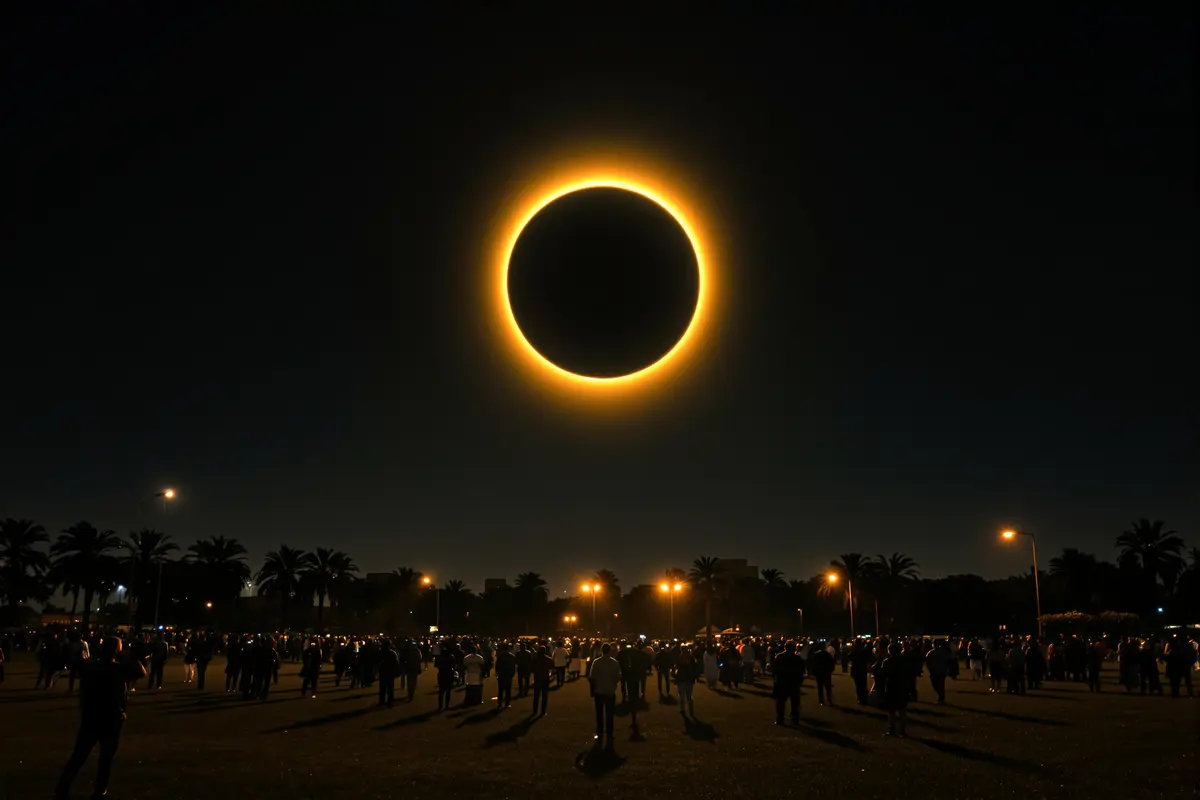
Then comes the hit: full totality. The light disappears. The sky dims like sunset, stars appear, and the sun becomes a black void surrounded by a glowing ring of light called the corona.
For many, it’s emotional. People gasp, cry, or fall completely silent. Your brain knows the science, but your body may still feel that something’s off. Some people describe it as beautiful. Others call it eerie.
Real threats aren’t cosmic — they’re human
Despite online rumors, the eclipse itself isn’t dangerous. But how people react can create issues.
- Eye safety: Looking at the sun without protection during its partial phases can cause permanent damage. Only remove eclipse glasses during totality.
- Driving hazards: Sudden darkness can distract or panic drivers, especially if they’re unprepared.
- Tech disruptions: Solar panels will temporarily lose output. Sensors may get confused. Even drones could struggle with sudden light changes.
There’s also fear. Social media tends to exaggerate uncertainty. Some voices will hype up conspiracy theories or panic. Others may dismiss real concerns. Finding balance in the noise is key.
How to safely enjoy the eclipse
The best advice? Treat it like you would a big storm or a fireworks display. Prepare a little, stay present, and observe safely:
- Buy certified eclipse glasses early — they’re essential
- Check if you live near or can travel to the path of totality
- Pick a safe, clear location to watch — a rooftop, park, or field works well
- During partial phases, glance up now and then with glasses on
- During totality, you can remove the glasses for those eerie, beautiful minutes
Planning to travel? Expect crowds in places like Luxor, Egypt, where tourists are already booking spots. Watch for flight changes and hotel spikes in those locations.
Should you worry about your pets or power grid?
Many animals do act as if night has arrived. Birds quiet down. Pets might seem confused. But it’s harmless and often fascinating to witness. As for energy systems, large power providers plan for brief solar dips. Small local outages or hiccups are possible, especially around solar-powered infrastructure, but nothing serious is expected.
Planes? Air travel remains safe. Pilots use instruments, not sunlight, to navigate. In fact, some flights will be adjusted on purpose — just to offer passengers a view from above the clouds.
Preparing emotionally, not just practically
This event won’t just be about light and shadow. It’ll be about how we, as people, respond. Will you record the whole thing on your phone, or simply look up in awe? Will you calm a nervous child or help an elderly neighbor use eclipse glasses?
Experts say the best thing to rehearse isn’t safety steps but your own reaction. Visualize where you’ll be, how you want to feel, and who you’ll be with. That little mental prep can soften the shock of seeing daylight disappear.
Will this change anything — or just leave a memory?
After August 2, 2027, the eclipse will fade from headlines. But it might live on in memories. The hush in that moment. The way people gathered with strangers. Or how it made the whole world feel a little smaller and more connected — for just a few strange minutes.
In an age of constant brightness and noise, even a small slice of shared darkness can bring surprise, wonder, and clarity. The longest eclipse of the century isn’t a threat — it’s an invitation. To pause, to watch, and to remember what it feels like when nature takes over the script.
Quick answers: 2027 eclipse FAQ
- Is it dangerous? Only if you look without eye protection. It’s not harmful otherwise.
- Will solar panels stop? Yes, briefly. Utilities prepare for this.
- Can planes fly? Yes. Commercial flights are unaffected.
- Will animals act strange? Some will, briefly. It’s natural and short-lived.
- Do I need special gear? Just safe eclipse glasses. Everything else is optional.