Table of contents
On cold winter days, it seems normal to tuck every vegetable straight into the fridge. After all, cold preserves freshness—right? Surprisingly, that habit might be causing your veggies to spoil faster. Certain vegetables actually suffer in the chilly, dry environment of a refrigerator during winter. Let’s take a closer look at why, and what smarter storage could look like.
Why some vegetables hate the winter fridge
Your refrigerator runs at around 3–5°C (37-41°F). That’s perfect for milk and meat, but not for all vegetables. Many of the ones we buy in winter come from warmer or moderate climates and react poorly to such cold, humid conditions.
For instance, potatoes turn sweet and mushy in the fridge because their starches convert to sugar in the cold. Tomatoes lose their flavor and become grainy. Carrots and green beans shrivel because dry refrigerator air pulls away their moisture.
Vegetables that spoil faster in the fridge
Here are the main cold-sensitive vegetables to keep out of the fridge in winter:
- Potatoes: Turn sweet, soft, and sprout quickly
- Onions: Can mold or sprout in damp fridge air
- Garlic: Becomes rubbery and sprouts
- Winter squash (like butternut or pumpkin): Develop soft or moldy spots
- Tomatoes: Lose their flavor and turn mealy
- Cucumbers and aubergines (eggplant): Get watery and mushy
Use your home as a natural cold room
Instead of automatically refrigerating, try using your home’s coolest spots. In winter, many areas naturally stay between 5–12°C (41–54°F), which is perfect for many shelf-stable vegetables.
Use a thermometer to find the colder zones in your house, like:
- Near an exterior door
- In an unheated pantry
- Under the kitchen counter
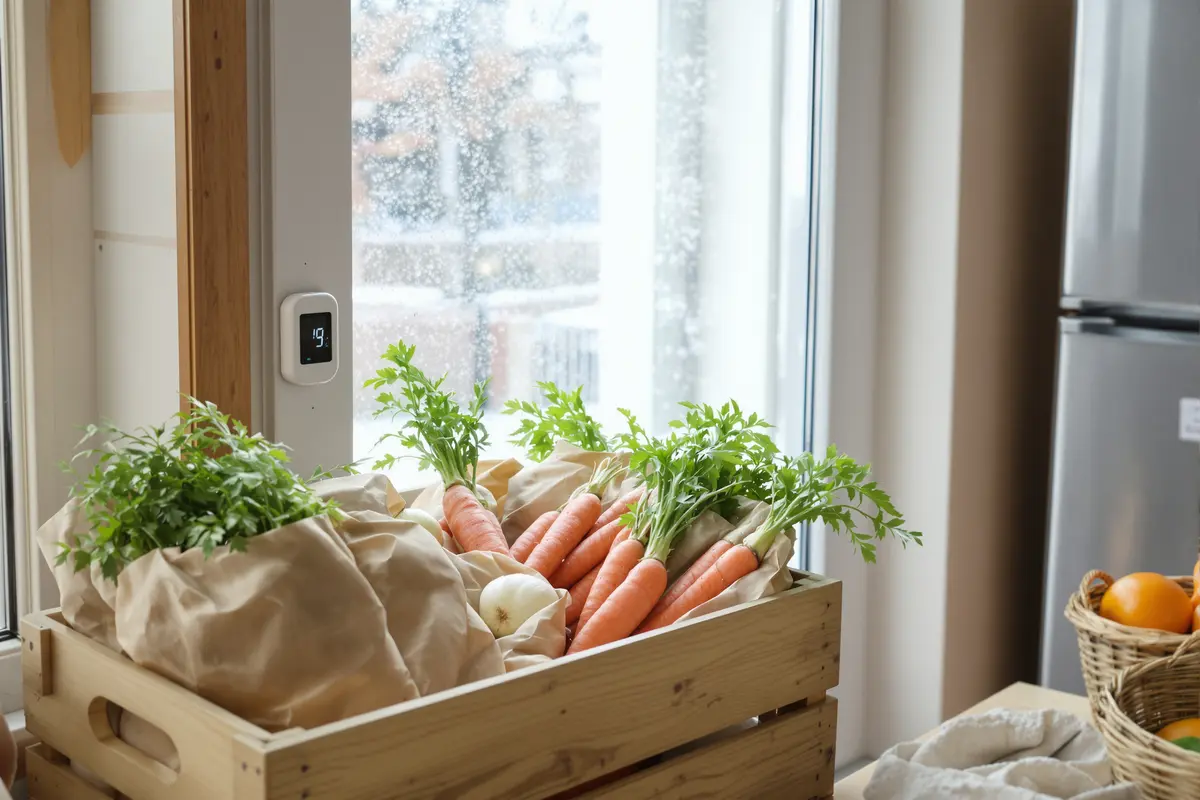
- Beside a north-facing window
Store potatoes, onions, garlic, beets, carrots, cabbage, and squash in those zones using paper bags or open boxes that allow air to circulate. Stay away from heat sources and keep produce out of direct sunlight.
Which vegetables still need the fridge?
Not everything should leave the fridge. Some vegetables are truly tender and spoil fast at room temperature, even in winter:
- Leafy greens (like spinach and lettuce)
- Fresh herbs (like coriander, parsley, dill)
- Mushrooms
- Chopped or peeled vegetables
Wrap these carefully or store them in containers with a bit of air. Use the crisper drawer to trap some humidity and keep them fresh longer.
Create a simple winter sorting habit
A quick trick will help reduce waste and overflow:
- When you get back from grocery shopping, lay all your vegetables on the counter.
- Sort them into three groups: “Fridge,” “Cool Storage,” and “Room Temp”.
Here’s a helpful guide:
| Fridge | Cool Room (5–12°C) | Room Temp |
|---|---|---|
| Spinach, lettuce, herbs, mushrooms | Potatoes, onions, garlic, beets, carrots, squash | Bananas, avocados, citrus (short-term) |
This quick step takes just a couple minutes. Once it’s a habit, you’ll find your veggies lasting longer—with fewer frustrating fridge surprises.
Real-life results from switching your storage
In one experiment, a couple placed half their weekly vegetables in the fridge, and half in a box near a balcony door that stayed at about 9°C (48°F). After three weeks:
- Potatoes in the cool room were still firm and sprout-free
- Fridge potatoes were sweet, soft-skinned, and growing shoots
- Tomatoes outside the fridge retained color and flavor
- Fridge tomatoes turned mushy and dull within days
The lesson? Winter’s outdoor chill can actually protect your food better than your fridge.
Set up a “winter box” and save time
You don’t need fancy equipment to store vegetables correctly. Just choose one spot—a corner of your kitchen, a pantry shelf, a crate by the door—and designate it for cold-stable produce. Label it if needed. This one step adds structure without overthinking.
Consider writing a list like this and taping it to your fridge:
- Don’t chill: potatoes, onions, garlic, squash, tomatoes
It’s quick, visual, and helps everyone in the household stay on the same page. Little habits add up.
Final tips: Simple rules to remember
Ready to cut veg waste this winter? Here are 3 fast rules:
- Starchy roots like potatoes and sweet potatoes prefer dark, cool spots—not the fridge
- Onions, garlic, shallots like air and dryness—skip the crisper drawer
- Sun-loving vegetables (tomatoes, aubergines, cucumbers) store better in a cool room than a cold fridge
Your fridge is a great tool, but it isn’t one-size-fits-all. In winter, let your home become a partner in preservation. You’ll waste less food, save money, and enjoy better texture and taste—without ever touching a gadget or a chart.